
Cloisonné — widely known in Chinese as Jingtailan — stands among China’s most treasured intangible cultural heritage handicrafts. For hundreds of years, this breathtaking metal-and-enamel art has captivated emperors, collectors and art lovers around the world. Every finished piece carries generations of hand-made wisdom you simply cannot find in mass-produced factory goods.
Many people first fall for cloisonné because of its vivid, glossy colours and intricate, lace-like metal patterns. Yet few realise just how many careful manual steps go into a single work. Unlike fast-made decorative items, true Jingtailan can never be fully replaced by machines.
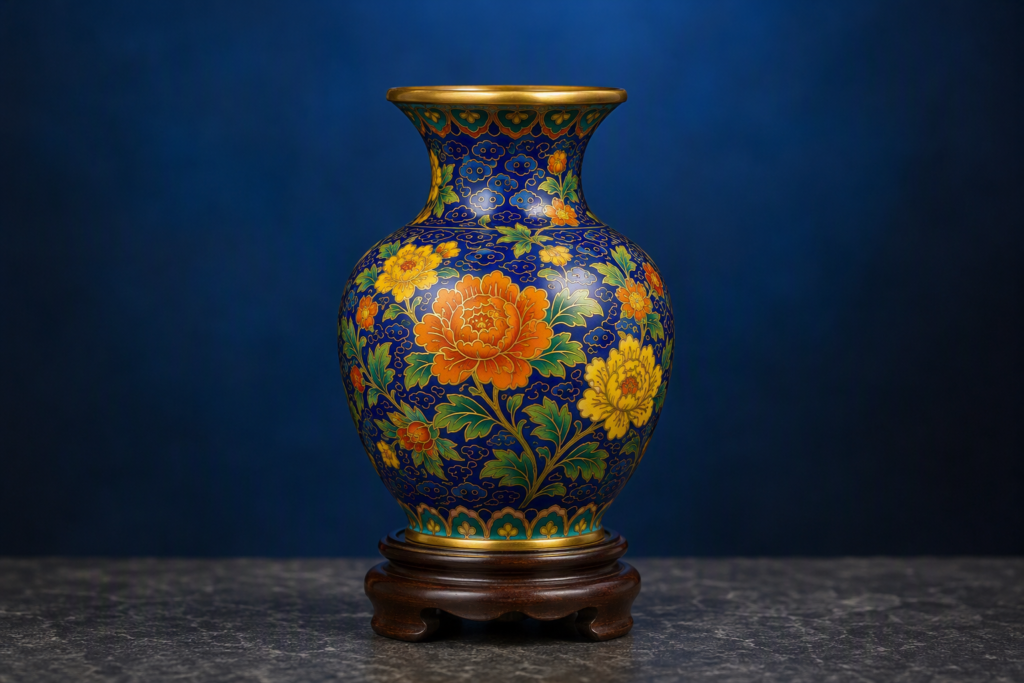
What Is Chinese Cloisonné (Jingtailan)?
Cloisonné is a decorative technique in which thin copper wires are bent and soldered onto a metal base to form small “cloisons” (compartments), then filled with coloured enamel and fired at high temperature. The result is a smooth, jewel-bright surface decorated with elegant floral, cloud and dragon motifs.
The technique is so closely tied to China’s craft heritage that it was named a national intangible cultural heritage. In Chinese, it is called Jingtailan — literally “Jingtai blue” — a name that honours both the craft and the era in which it flourished.
How Is Cloisonné Made?
True cloisonné is one of the most labour-intensive crafts in the world. A single complex piece can take months of patient hand work. Here is how it is made, step by step:
1. Copper base shaping Artisans hammer and shape copper sheets into vases, boxes, plates or ornaments.
2. Filigree wire work Thin copper wires are bent, twisted and glued onto the metal surface, forming thousands of tiny compartments. This is the soul of the craft.
3. Filling with enamel Each small cell is filled with coloured enamel paste, shade by shade, by skilled hands.
4. High-temperature firing The piece is fired repeatedly in a kiln. Each firing melts the mineral enamel onto the metal — but the surface often sinks, so colour is refilled and refired, sometimes five or six times.
5. Polishing and gilding The surface is ground smooth, then gilded with gold or silver to finish the work.
Only after all these steps does a piece of Jingtailan reveal its glowing, glass-like beauty.
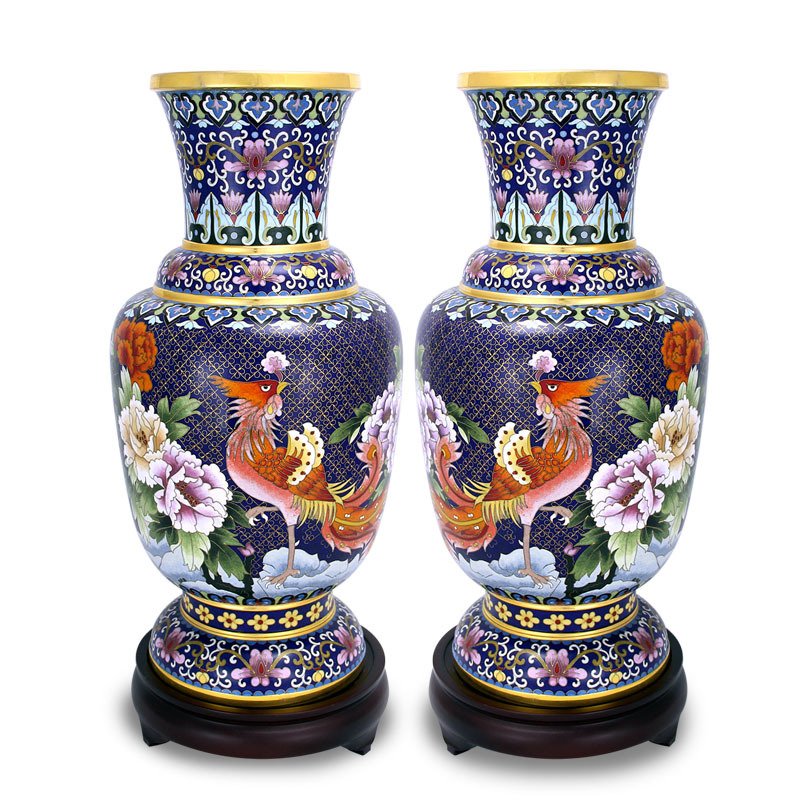
History of Jingtailan Art
Cloisonné flourished during the Jingtai reign of the Ming Dynasty (1450–1457), which is why the Chinese name Jingtailan endures today. At the time, it was a precious imperial art, reserved almost exclusively for the royal palace. Master craftsmen were personally appointed to serve the court.
As centuries passed, this noble craft spread beyond the palace walls. Techniques were handed down from master to apprentice, surviving through the Qing Dynasty and into the modern era. Today, a new generation of artisans keeps this ancient skill alive, combining traditional methods with contemporary design.
Why Collectors Love Handcrafted Cloisonné
What makes genuine handcrafted cloisonné so special for modern collectors?
- One-of-a-kind pieces. Because every stage is done by hand, no two items are ever 100% identical. Each piece carries its own subtle character.
- Long-lasting beauty. High-quality enamel and gilding deliver rich, durable colour. Properly cared for, cloisonné can keep its brilliant gloss for centuries.
- Versatile value. It works beautifully as home decor, a meaningful cultural gift, or a valuable collectible.
How to Tell Real Cloisonné from Imitations
When shopping for cloisonné, it helps to tell genuine handcrafted Jingtailan apart from machine-made copies. Machine-stamped pieces may look similar at first glance, but they often lack the fine, slightly uneven hand-bent wire lines and the layered depth of real enamel.
Look closely: authentic hand-made cloisonné carries subtle traces left by human hands — tiny variations in the wirework, gentle asymmetry in the patterns. That human touch is precisely its charm.
Explore Authentic Jingtailan at LoongMall.shop
At LoongMall.shop, we partner directly with heritage workshops and experienced cloisonné masters across China. We carefully select authentic handcrafted Jingtailan pieces, cutting out middle links so global buyers can access genuine Chinese intangible heritage handicrafts.
Whether you are searching for a decorative cloisonné vase for your home, or a culturally meaningful gift, hand-forged cloisonné connects you with centuries of Chinese art history.
Explore our fine hand-made cloisonné collection, each piece crafted by Chinese master artisans.
If you would like to learn more about Chinese traditional handicrafts, feel free to reach out — we are always happy to help.
— The LoongMall.shop Team